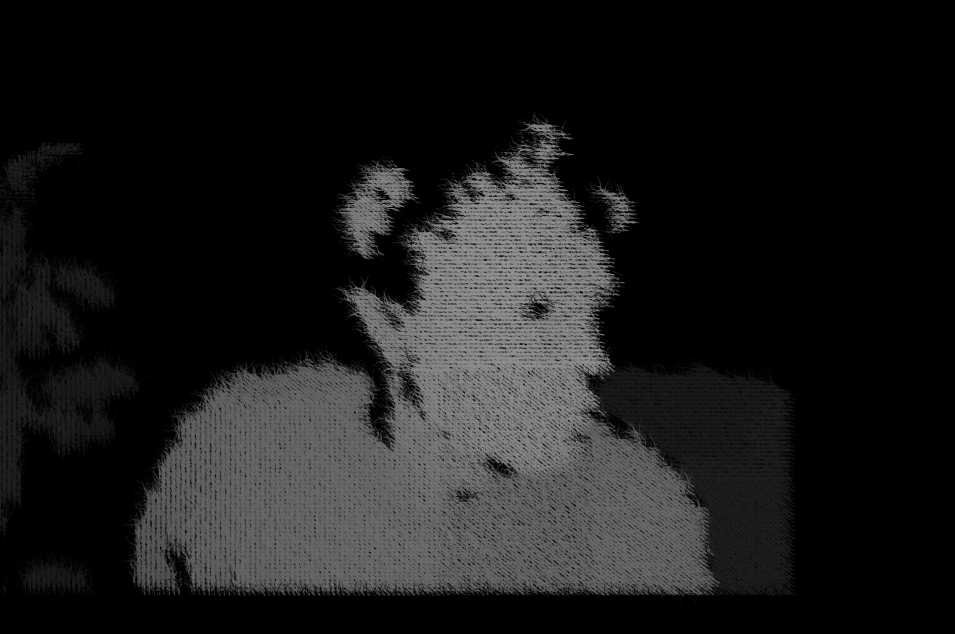
Stairs

Although intrigued by the motion created in my previous Muybridge textural work, there were many aspects I wasn’t entirely satisfied with. I decided to work on another set of imagery and see where it took me.

The woman descending stairs had been on my mind ever since the bed sequence so edited that into a sequence the would repeat reasonably well.

Creating motion: I thought again about morphing between still frames but this didn’t work with this sequence, the contortion of shapes getting it bed seemed to fit with the distortion of the created motion, but here it ruined the flow with the new motion working against the flow of movement down the stairs.

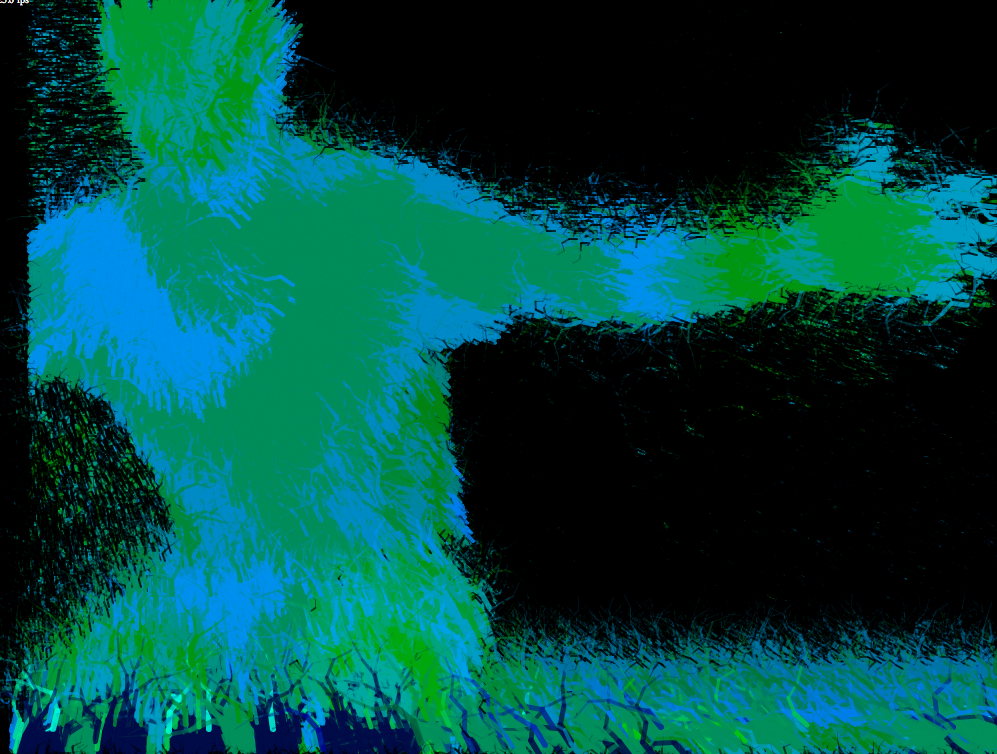
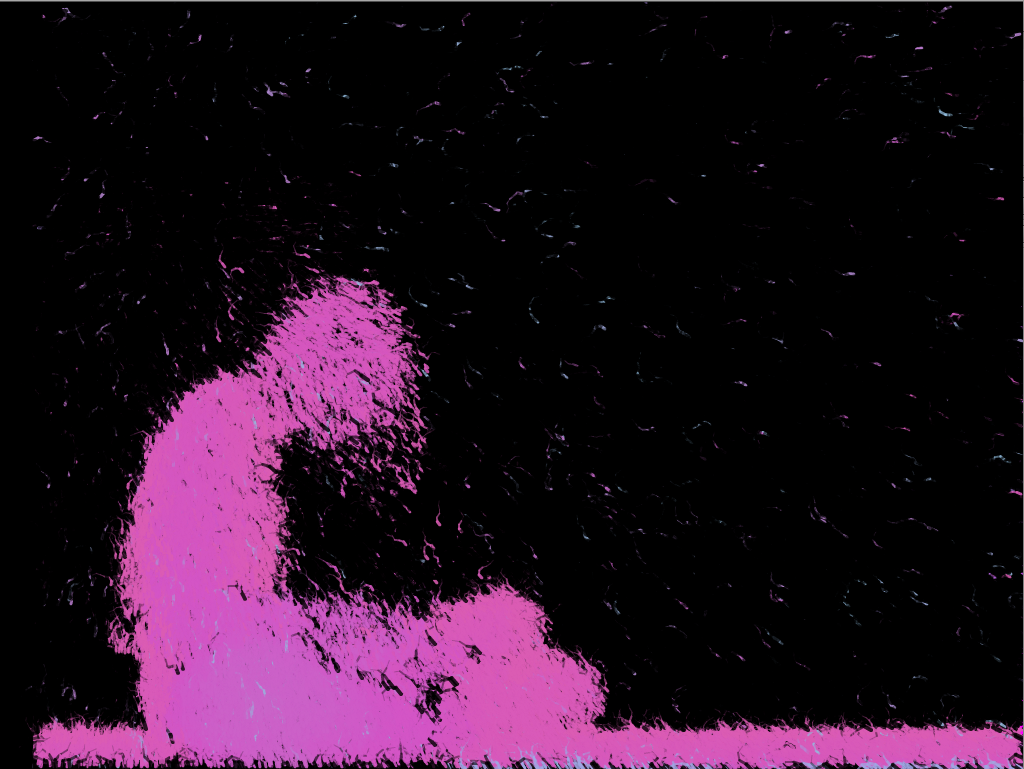
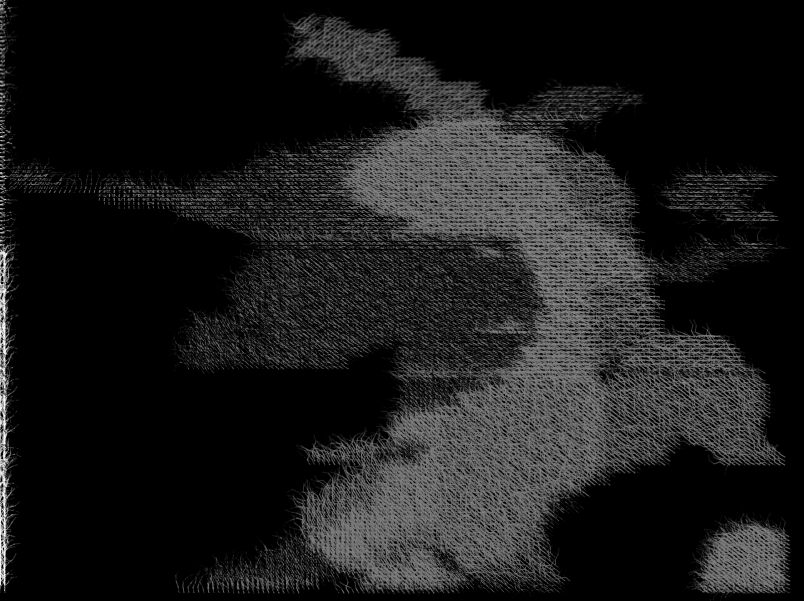
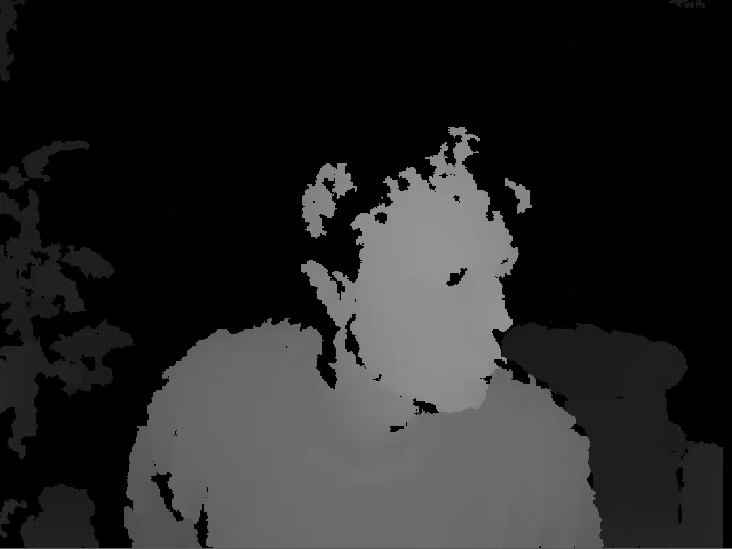
Creating texture: With the morphing removed I set about examining texture more thoroughly. The rationale for adding texture to these images is driven by the concept of seeing differently. if you couldn’t see light but the you still created imagery in your mind how would movement look. Aslo the kinect started me thinking that if the kinect “sees” depth and it was creating the vague textured outlines, so if that was our only form of vision how would it look given the richness we curently use to process visual information. Thinking more about these ideas I started thinking about how the Kinect is reaching out (with it infrared projections and feeling for an object) it decided to imaging a sense somewhere between vision and touch. A tactile vision how could I represent this idea and what might be tactile motion, The hair like tendrils remind me to computer generated flow fields signifying an object moving through a fluid but at the same time they had and incredibly tactile look to them.

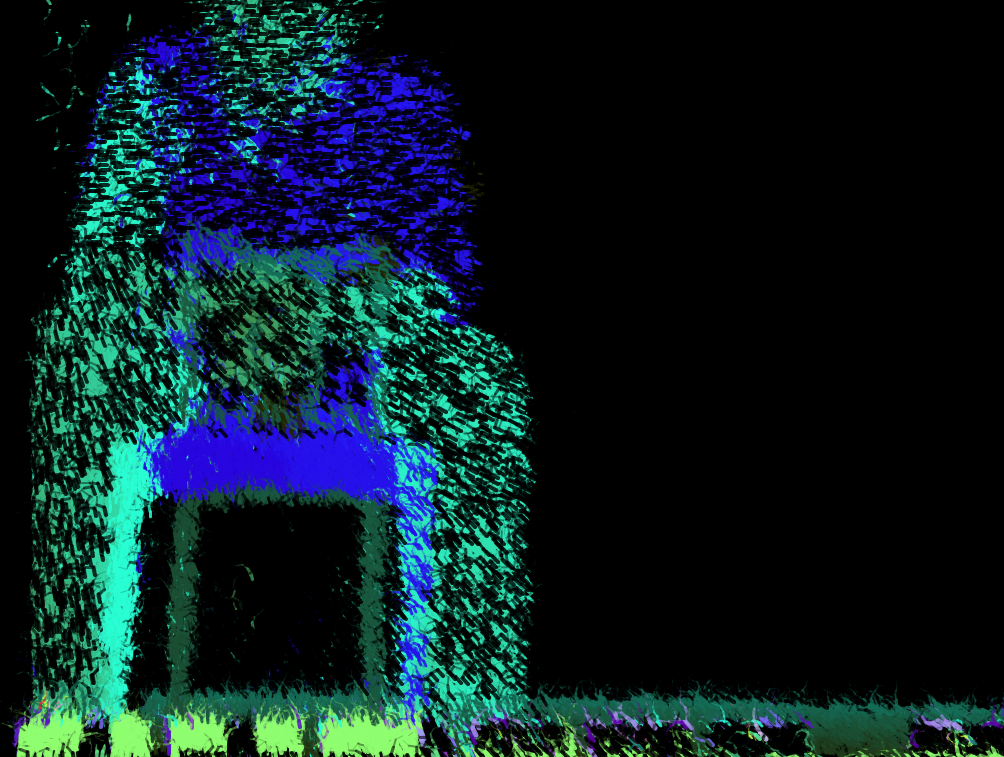
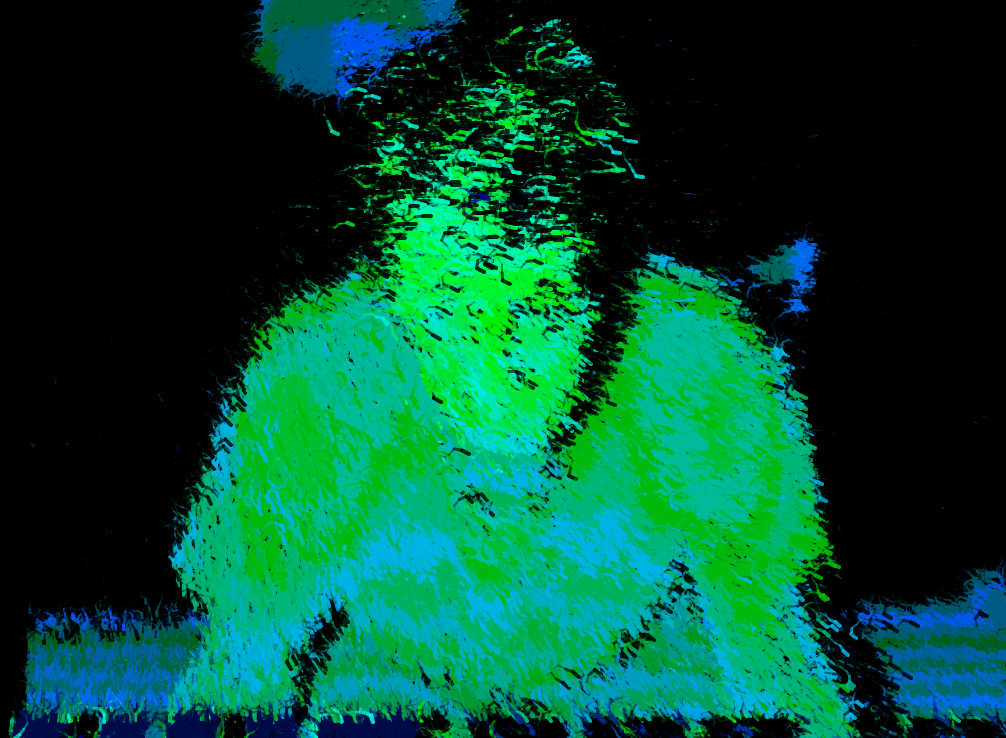
This work took a few colour iterations as it evolved however I like the warmth of this one with its flesh inspired tones.

the second instalment of this work was interested in pushing the importance of the physicality of the image down and just looking at the motion.
Posted in e-media 3, Uncategorized | Leave a comment

Everybody has one story – tell your own story.

Don’t know if its all just due to lack of sleep so I was open to suggestion but this Idea as delivered by Michael Eather in the tops lecture this morning really struck home.

Although excited by the the direction my work was taking, I was already think about what was next, but what if there doesn’t need to be a next what if Even after this next semester I keep exploring these ideas where could it go? On this thought I though about all my previous work and what ideas could extend to this process multiple concepts sprang to mind. Michael nod to Magritte also put we right back to my love of his work and umbrellas sprang to mind. One of the first pieces of coding I did when I first started experimenting with reading Kinect data was to make an inverse umbrella. You opened the umbrella and this started rain falling down from under its canopy.  My mind just straight to how this could work along side my current you as an extension to these ideas. There is a firm image in my head of this work and I had to stop myself from generating too many other or I waould have missed the rest of Michaels talk.

I always love these moments when a few words mark a whole new perspective of thought. This massive realisation for me but for most others it was probably just more words.

Posted in Uncategorized | Leave a comment

Back to the start to tidy up some loose ends, almost

After finding a good place to leave the previous work (waiting for semester 2) I decided to revisit my previous idea of using the depth data to push through time (frames of video/animation). the Tree and Muybridge works.

For want of some better source material I decided to push on with the Muybridge images. I decided it would work better if I had a larger image and smoother animation to work with. I enlarged the images and decided to morph between the frames to get a less jumpy image. I had been generating detail and colours based on the given image data so generating frames seemed a natural progression). There were 3 different angles of the woman getting in to bed so I chose to put them together in a triptych. This gave a quite mesmerising motion so I decided to work with it a little more. In a similar vein to the other works I added colour and texture really just to see how it would look. Again I was captivated by the imagery, It wasn’t quite right but there was something there, something that had me coming back and playing the footage over and over.

This never did make it back into the depth/time experiments instead I become more interested in examining the notion of movement as texture. So it was back to the Muybridge resources, and this time I would take the stairs.

Posted in e-media 3 | Leave a comment

Getting Somewhere & changing the effects of time

After much adjustment I arrived at a range of textures that I was happy with it. I also modified my colour code so I can have more control over the palette. I do still want to do more work on this as my controlled palettes tend to be a little flat. (I still like the banding of my erroneous code).

The last thing I removed was the scanline updating of the imagery the feel of it was very much electronic scan rather than a painted effect. Instead I set up a random “painting” of the scene, this gave a much more fluid effect but it had the added advantage of effecting time in a much different way.

Instead of the Daniel Crooks style distortions the image took time to develop and also took time to disolve, this meant for an object?person to make an impact on the screen it/they had to spend some time being still. A movement would break up the forming imagery. Leaving the scene would leave a temporary ghost. Jumping about and waving you arms would only have a minor impact on the image. Stillness and quiet contemplation would render you in to the work.

These gentles interactions were what I had hoped to foster. The ghost image tied back to ideas I had had about what if a dog processed scent trails visually. It also ties into previous ideas of memory. The longer an object is present the more it gets painted into memory, the richer its rendering becomes the fleeting passing very soon is lost. The moment is also very strong here, sometimes a great image occurs but it will never stay. While trying to get screen grabs of the work If I delayed too long the moment was gon never to be created again. Any of the still images captured can never be recreated again.

All of this just seemed to fall into place, I had no real plan when starting out, just a direction or two to follow. But some how all the pieces fell into place. Im not sure what I put it down to but I know it wouldn’t have happened if I had no time to play.

Posted in Uncategorized | Leave a comment

Lots to fill in until we get here but this is my latest work

Update: I have now filled in the processes that led me to here, the details are accurate as is the chronology but the exact dates are out.
Posted in e-media 3 | Leave a comment

Swapping thread for paint

One of the advantages of creating your own code for image manipulation is that you have complete control, you aren’t just left tweaking sliders on someones preset that you can only guess how it works.

I had started with very fine grain generation of my textures but now it was time to get under the hood and see how I could ramp it up.

It turns out bigger is better.

It was now heading more towards a painted feel a few more changes and I might be closer

Posted in Uncategorized | Leave a comment

Seeing2.0 – it should be colourful

So far the images I was working with from the Kinect were greyscale. An image stripped down to just impart the necessary information.

One of the best things about working with light is the bright colours available. A fan of neon lights grow in the dark colours and phosperescence in nature, these very manufactured colours have a strong influence on me I think it harkens back to the imaginary worlds of my childhood picture books. So gery was never going to be an option I was content with. Besides this the human brain is great at perceiving colour we process different wavelengths of light on it creats these vivid colours in our minds if we saw different;y i.e. we save depth then it would make sense that these distances may be represented with colour rather than graduations of light. As a stop gap I decided just to apply a simple function to the depth image to transform the depth information into colour, there are plently of ways to map the depth to a hue but I wasn’t keen to do this quite so methodocilly. I wanted to pull my colours from an selective palette. An initial coding error caused some banding in the colours.

At this point A few doubts started creeping in I had added the texture to get away from the computer generated look but now I had found myself with some sort of warped computer generated tapestry. I needed to work on the texture.

Posted in Uncategorized | Leave a comment

Drawing slow – bending time

Initial texture draws were tested on a still image, but when I started to run these slow drawing techniques on moving footage the resultant imagery reminded me of the works of Daniel Crooks. Not the look but it’s a very similar technique of delivering thin slices of images from different times

I liked how the forms that were generated but i wasn’t satisfied with how they were updated, it looked very much like an out of sync old style TV with the line of up update slowly running down the screen

Posted in e-media 3 | Leave a comment

Kinect a new way of seeing – it should be furry.

This isn’t the advertising for Kinect, I think they are pushing a new way of playing/interacting.
For some time I have been interested in how our senses other than sight work and what if we could visualise them what would we see. A dog goes for a walk and can tell another dog had passed along just a few minutes earlier. We recognise people mostly from appearance if we could function like a dog a get a glimpse of what had happend a while ago how could that look ? maybe a ghosted image trail ?

The Kinect can see in 3D it sees depth, closer parts of an object are brighter objects further away are darker. Its simple for us to understand the greyscale imagery that is formed but it sets me wondering about how we would see if other sensors were wired to our visual cortex.What would it mean to be able to see something other than light ?

One of the first things that surprised me when first accessing the Kinects depth imagery was just how organic it is. I was expecting something for more blocky and pixelated not raggedy pulsing edges. I was captivated by this aesthetic and by the idea that this computers way of seeing was very different to those that had gone before it. If I was going to embrace this I should embrace it differences. I issue i had was that even though the image looked organic, if I wanted to enlarge this imagery I soon came upon pixelation, which went against the look that I liked. At this stage I decided that I was going to enhance the ragged look and build another layer of texture on top of that which the kinect gave me.

At this iteration I was happy with the detail I could create. It wasn’t quite the aesthetic I was after but a starting point.

One of the issues with generating this texture was the time it took. For a this to work in the way I intended it would have to be able to update at a good frame rate. This wasn’t the case yet. I decided to render the image in strips from top to bottom to get more of an idea of how long it took to draw.

Posted in e-media 3 | Leave a comment

It can work for the trees what next – more depth to time displacement

Just to see how this could work with other media I looked around for more time-lapse imagery. There wasn’t much that would work or was interesting. Somehow while searching for ideas I ended up with some images of Edward Muybridge. In some way this was like time lapse (just very short time steps) but I have always had an interest in his work and wonder about the fortuitousness of chance so set out to see if I could use some of these mages to create a sequence. It turns out Muybridge was quite as exacting as he may appear but I soon had my sequence to try with my depth to time system.

It was animated so that it looked like each image in the grid was progressing along its own sequence. That fact that there were rows of this gave individuals motion but also a wave like motion to the whole sequence.

The first thing that struck me was that without colour and a large focal object in the image it was very hard to make out what was going on. I was alos getting some performance issues. The idea that I had built something that you could plug content into was gone.

I persisted with this making the code more efficient. I also found that the already segmented images I was working with just lost their definition as soon as the main image started to break up. I had tried smaller segments to no avail so with few options I tried increasing the size of the elements at each capture. This resulted in the interesting Mosaic effect you can see below.

I think the main issue here is the main image is very static, which works just fine when there are still images defining the movement but the addition of actual movement here clashes with Mutbridges implied movement. Although interesting there was no real spark for me, so I decided to put this whole line of enquiry on hold and explore other ideas with the Kinect.

Posted in e-media 3 | Leave a comment